When the Spindle Doesn’t Do What It’s Supposed to Do
A machine tool manufacturer needs a main spindle drive for a new grinding application.
The motor must be precisely matched to the application – yet at the start of the project, even the choice of inverter is still undecided. Discover how ATE worked with the spindle manufacturer to develop a synchronous motor that performs reliably under real-world conditions.

Industry
Machine Tool Industry
Application
Main spindle drive for a grinding machine
Challenge
Integrating the synchronous motor, inverter and spindle into a stable system despite initially undefined system parameters
Result
A main spindle drive validated by measurement, operating without an additional line reactor
The initial inquiry sounded straightforward: a manufacturer of grinding machines was looking for an electric main spindle drive. Power, speed, installation dimensions – the usual parameters. The spindle manufacturer, a specialist in high-frequency and high-speed spindles, was responsible for developing the spindle and approached ATE to develop the motor.
But anyone working in drive technology knows that a motor is never an isolated component. The stator, rotor, inverter and mechanical spindle structure form a single system.
At the start of the project, however, a crucial part of the equation was still unknown. The inverter to be used had not yet been selected. It was also impossible to determine whether a line reactor would be required.
This situation would have posed a problem for a standard off-the-shelf motor. For a custom-engineered solution, it is part of the job – provided the developer knows how to handle it.
ATE designed the brushless synchronous motor, size DC 106/100/4, so that it would not be restricted to a single system configuration. Instead, several performance characteristics were specified. The electromagnetic design of the stator, rotor and motor winding took into account the requirements of a highly dynamic direct drive while leaving room for variables that had not yet been resolved.
When Theory Meets Reality
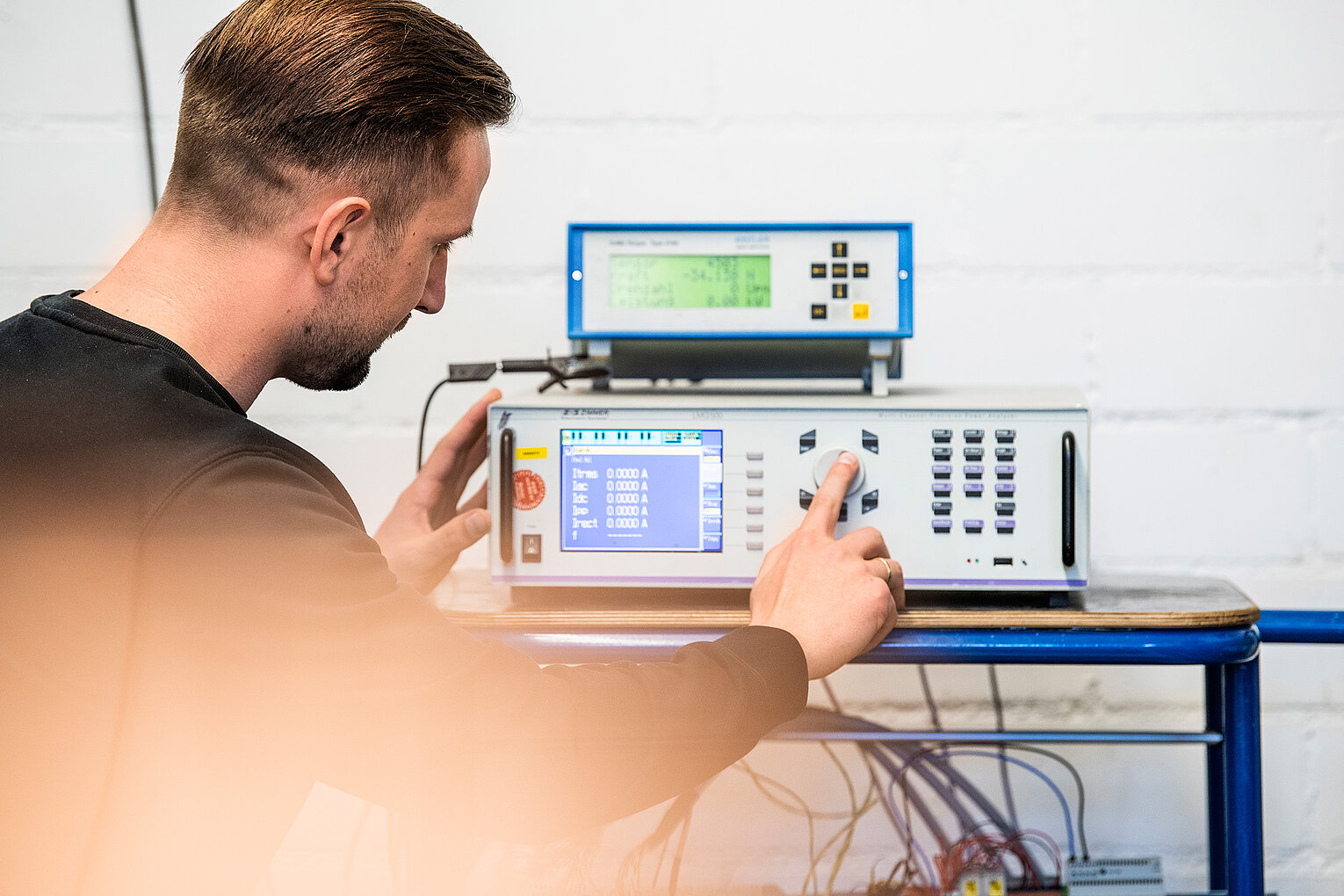
The end customer required measured proof of the spindle’s performance in its final configuration. No datasheet, no simulation results – actual measurements under real-world conditions.
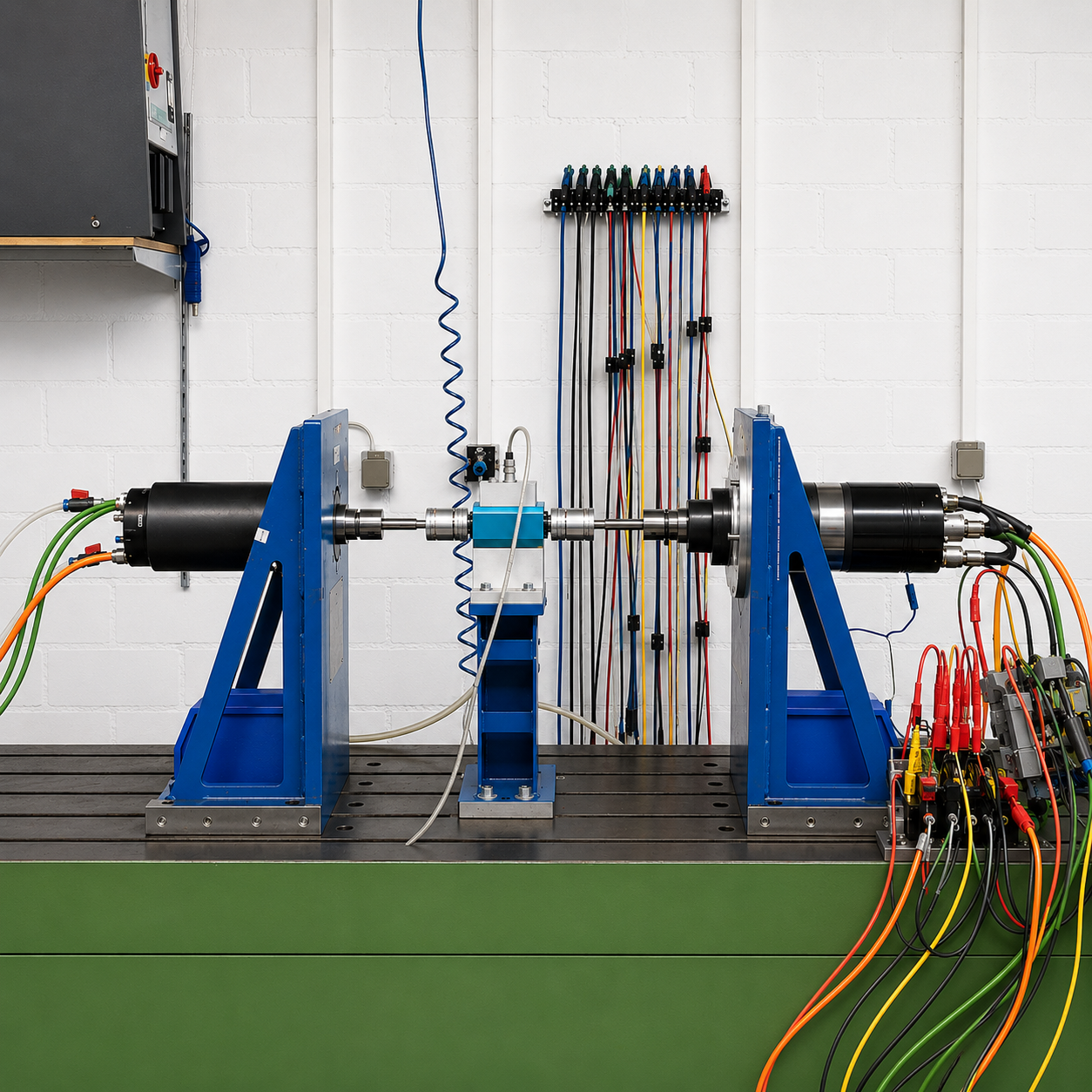
ATE, the spindle manufacturer and the inverter supplier therefore organised a joint system test. It took place at ATE’s premises, where the necessary test infrastructure was available.
And, as is often the case with highly dynamic spindle drives, things did not run smoothly straight away.
Interactions between the motor and the power electronics produced operating conditions that none of the partners had anticipated during their individual design work. These system-level effects only became apparent when the components were operated together. Anyone familiar with such projects knows that this is precisely where simply supplying a motor ends and genuine motor engineering begins.
Rather than waiting for a complaint or a change to the specification, ATE analysed the system effects together with the project partners. Experience gained from numerous spindle applications helped the team interpret the interactions and propose targeted adjustments to the overall system.
In this project, ATE delivered more than a synchronous motor for a main spindle drive. ATE also provided analysis, test infrastructure and engineering expertise when they were needed most.
What This Project Demonstrates About Drive Engineering
Main spindle drives for grinding machines are not off-the-shelf products. They are developed through collaboration between the spindle manufacturer, machine builder, inverter supplier and motor engineer.
In this project, ATE demonstrated what developing a custom synchronous motor really means: not just electromagnetic design, but taking responsibility for ensuring that the motor works as part of the complete system.
For development engineers and project managers facing a similar challenge, the relevant question is this: Do I need a motor supplier – or an engineering partner who will help me solve the problem?