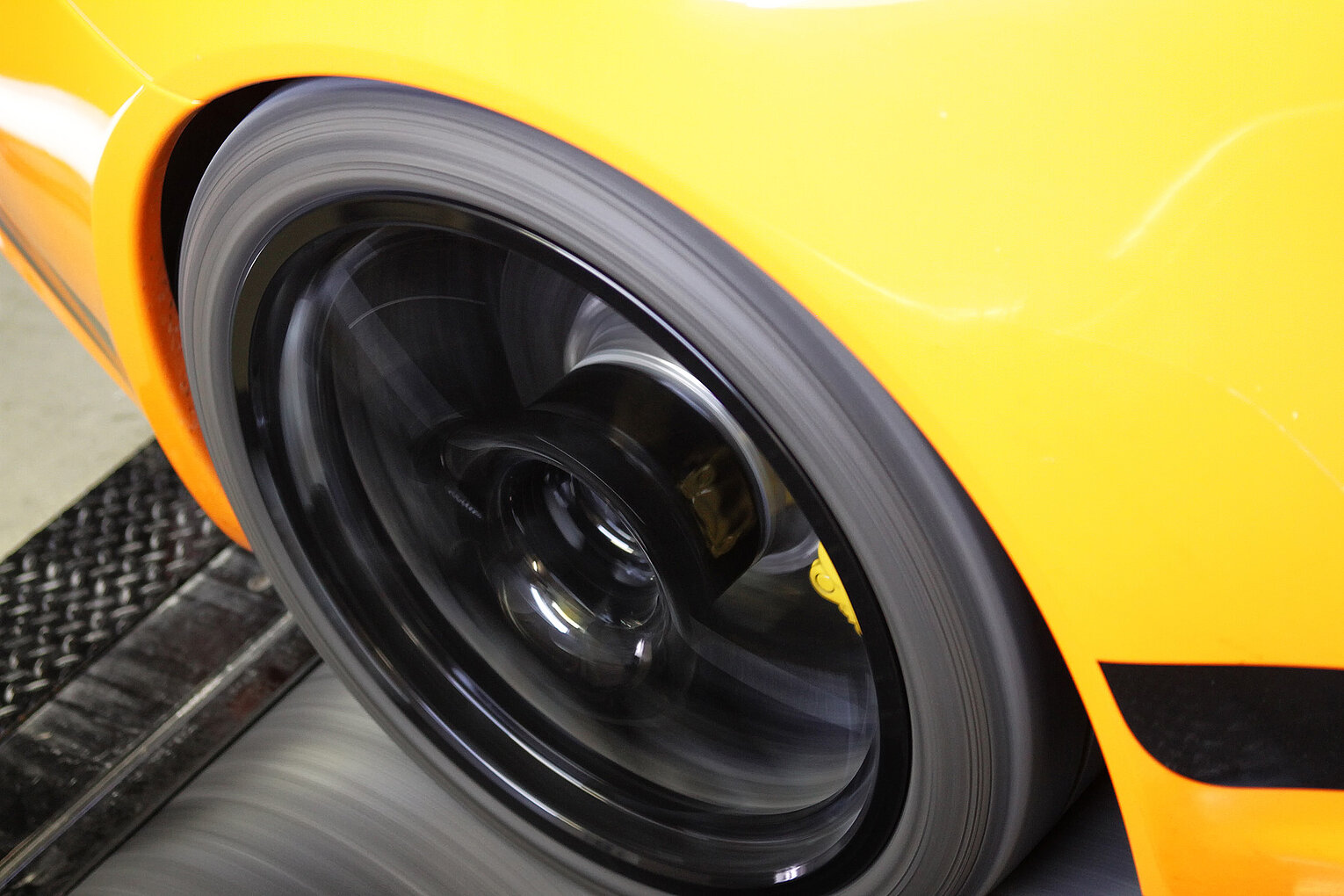
Drive solutions for test bench drives
On a test bench, the electric machine is not just any old drive: Whether in automotive or industrial applications, its dynamics, control quality and inertia determine how reliable the measurement results ultimately are. ATE does not build the test bench – but rather the machine that ensures its precision.
Where ATE provides support for test bench drives

E-Motor & eAxle Test Benches
Drive solutions for the development and validation of electric motors, axle drives and integrated eDrive systems.
Motor & Gearbox Test Benches
Test bench drives for testing electric motors, gearboxes and complete powertrains.
Chassis Dynamometers & Vehicle Test Benches
Drive solutions for chassis dynamometers and for testing and validating vehicle powertrains.
Production & End-of-Line Test Benches
Electric machines for repeatable functional testing and quality control in series production.
Endurance & Lifetime Test Benches
Test bench drives for cyclic loading, long-term testing and assessing the service life of drive components.
Load Machines & Industrial Test Benches
Electric drives and load machines for test benches used for pumps, compressors, generators and industrial drive systems.
What makes the drive task challenging
Unlike a conventional drive, a test bench machine must be able to reproduce real operating conditions reliably – both in motor and generator modes. Four factors determine the design.
The quality of a test bench depends directly on the accuracy of its drive. Load profiles, speed curves and defined operating points must be generated in a reproducible manner – regardless of whether a motor, a pump or a complete drive system is being tested.
Many applications require rapid load changes, high accelerations or speeds well into the high-speed range. For highly dynamic load simulation, mass inertia is a key factor alongside overload capacity – it determines acceleration capability, control behaviour and the reproducibility of dynamic test cycles. Rotor strength, balancing and vibration behaviour are all part of the design here.
Modern test benches often operate in both modes: absorbing energy, simulating loads, operating in generator mode or feeding energy back into the grid. Inverter operation, energy recovery, efficiency and reproducible operating points are therefore taken into account at an early stage.
Test runs often last for hours or days. Continuous loading and high power density require a finely tuned interaction between the rotor, stator, windings and cooling system. The decisive factors here are not only service life but also the stability of the measurement results – including an often underestimated factor: heat input into the test chamber, which can distort the measurement itself.
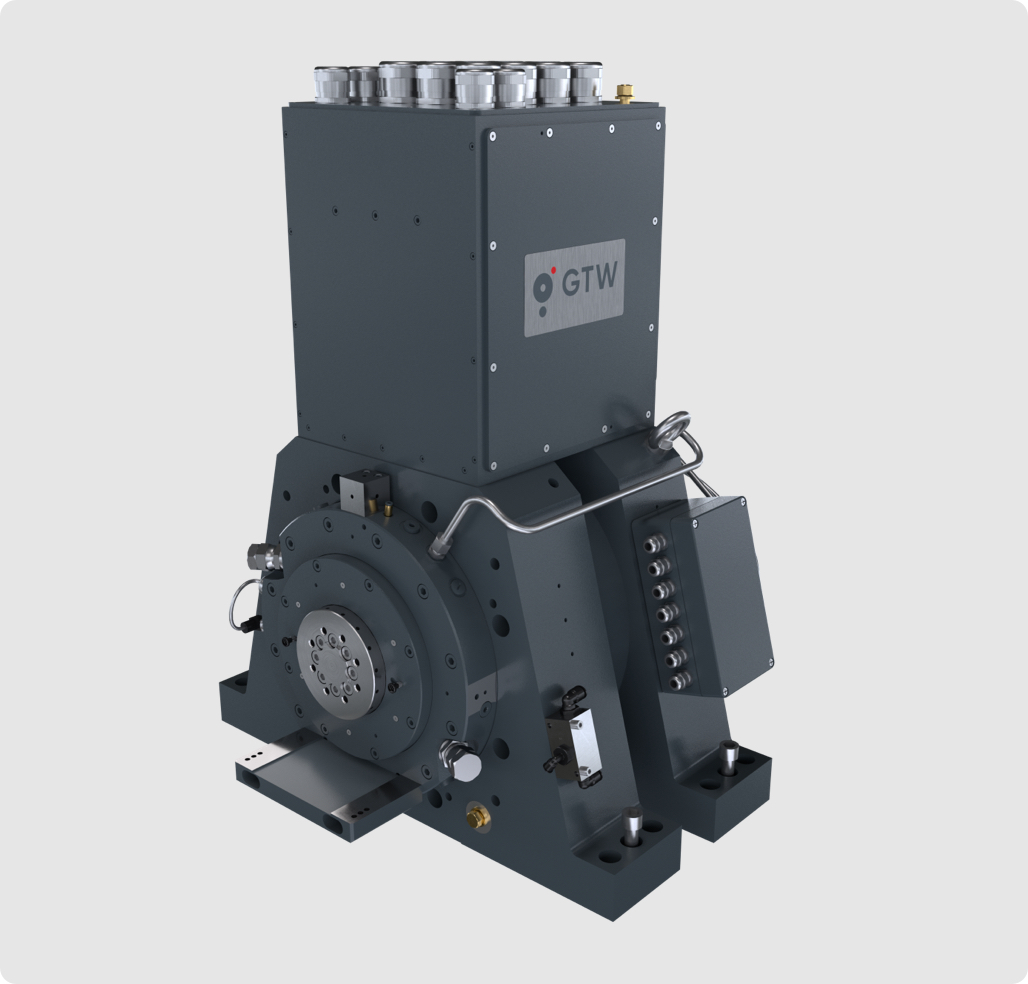
Standard motors reach their limits as soon as several requirements apply simultaneously – such as high speed with low mass inertia, high overload capacity, regenerative operation, a compact installation space and reproducible load profiles.
It is precisely this combination that is the rule rather than the exception in test benches: rapid load changes, motor and generator operation, high continuous power, customized interfaces and reproducible test cycles. In such cases, the electric machine itself becomes a crucial component of the test bench concept – and ATE develops customized rotors, stators and electric motors that are precisely tailored to the test task.
How ATE approaches such tasks
Clarify requirements
Test object, speed range, torque, power, mass inertia, test duration, load profile, cooling concept, inverters, sensor systems, installation space, interfaces and target number of test specimens. The basis of any robust design.Designing the drive
Rotors, stators and windings – as synchronous or asynchronous machines, torque, direct or high-speed drives, right through to load machines and dynamometers. Depending on the project, individual components or a complete electrical machine.Consider integration
Inverters and control systems, torque sensors, cooling, shaft and flange geometry, as well as encoder concepts, are tailored to the existing test bench design.Preparing for implementation
From functional prototypes through validation to series production. Development and manufacturing under one roof.What goes into this
Customized drive solution for a highly dynamic automotive test bench system
Initial situation: A manufacturer of automotive test bench systems is developing a highly dynamic dynamometer. Its existing test benches operate successfully with standard motors – but for a new customer project, their power reserves were no longer sufficient. In particular, the required overload capacity exceeded what is achievable with standard off-the-shelf motors.
ATE solution: In collaboration with the customer, ATE developed an application-specific machine with a customized winding and optimized design: bespoke rotors, stators and windings, electromagnetic design, tuning of the winding to the required torque and load profile, and validation through measurements and functional tests carried out directly on the customer’s test bench.
Result: A drive solution tailored to the test task, offering high dynamics, high overload capacity and reproducible operating behaviour – ready for series production.
FAQs

Tailoring drive solutions
Are you developing a test bench with specific requirements in terms of dynamics, control quality, continuous operation or integration?
ATE supports you in the development of customized rotors, stators and electric motors – from prototype to series production.
Call us on
+49 (0) 7561-98248-286
Send us a message to
u.ertel(at)ate-system.de