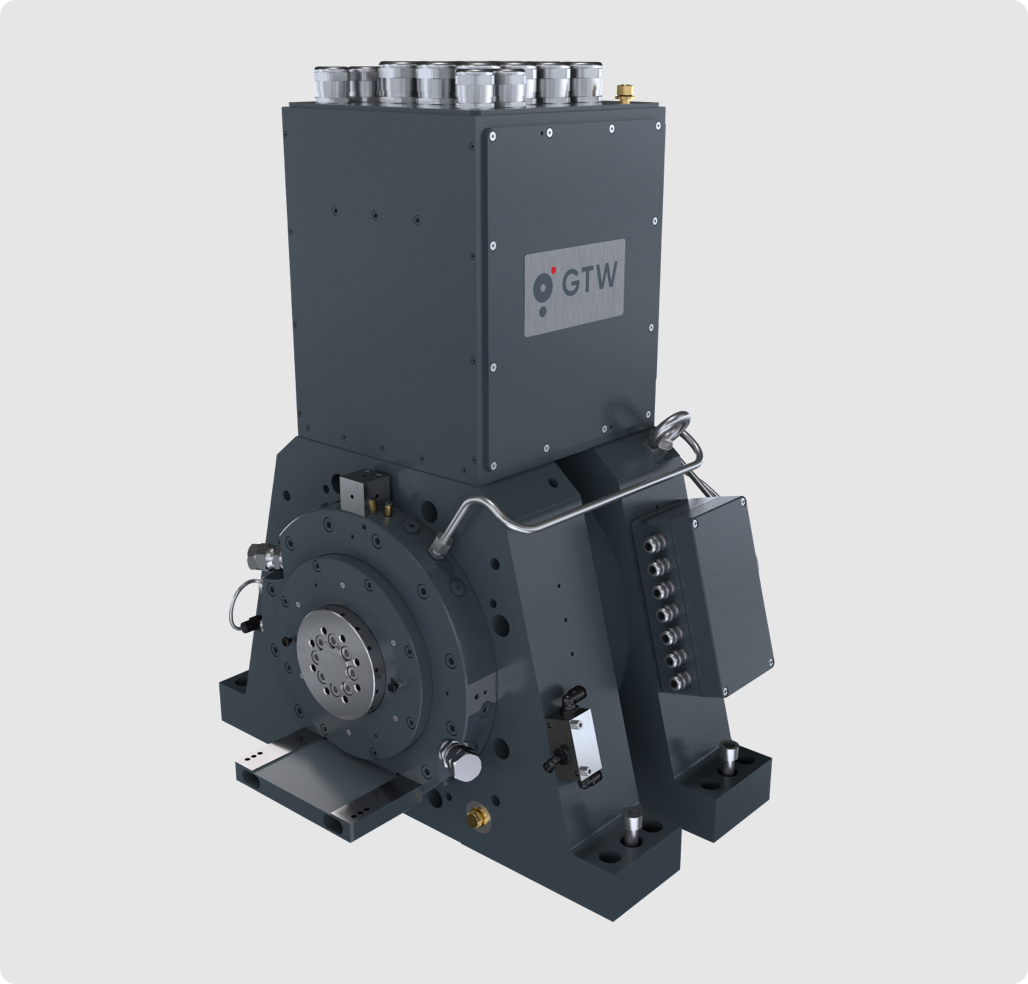
500 kW at 30,000 rpm – in a compact housing
Electric motor test benches for e-mobility development must continuously simulate peak loads that last only seconds in real-world driving. This requires high power, high rotational speeds and minimal mass moment of inertia – all within a housing capable of dissipating the resulting heat. This is how ATE and GTW GmbH jointly developed a test bench motor that has been a proven platform since 2019.

Industry
Test Bench Technology / Powertrain Development
Application
High-dynamic test bench motor for electric drives
Challenge
500 kW and 30,000 rpm with minimal mass moment of inertia and a compact design
Result
RigBe 30k-4 – an established platform for high-dynamic test bench systems since 2019
Testing an electric powertrain on a test bench requires a motor capable of reproducing every load scenario – faster and more precisely than the drive under test.
Acceleration ramps, peak loads and abrupt changes in rotational direction: the test bench motor must reproduce all of these without becoming the limiting factor itself.
As the rotational speeds and power densities of modern electric drives increase, so do the demands on test bench technology. Together, ATE and GTW GmbH, a specialist in test bench systems, defined the concept for a new test bench motor: a permanent-magnet synchronous motor capable of speeds up to 30,000 rpm, delivering 500 kW in overload operation (S6) and 400 kW in continuous operation (S1), while maintaining minimal mass moment of inertia and a compact design.
Optimising power and inertia at the same time – normally impossible
Higher power generally requires more active material: longer core stacks, larger magnets and more copper. More material means greater mass, and greater mass means higher inertia – exactly what a high-dynamic test bench motor must avoid.
At the same time, 500 kW in a compact housing generates considerable power losses. At 30,000 rpm, frequency-dependent iron losses and rotor-dynamic loads also come into play, increasing disproportionately with speed.
The design therefore had to meet three competing requirements simultaneously: maximum power density, minimum inertia and thermal stability.
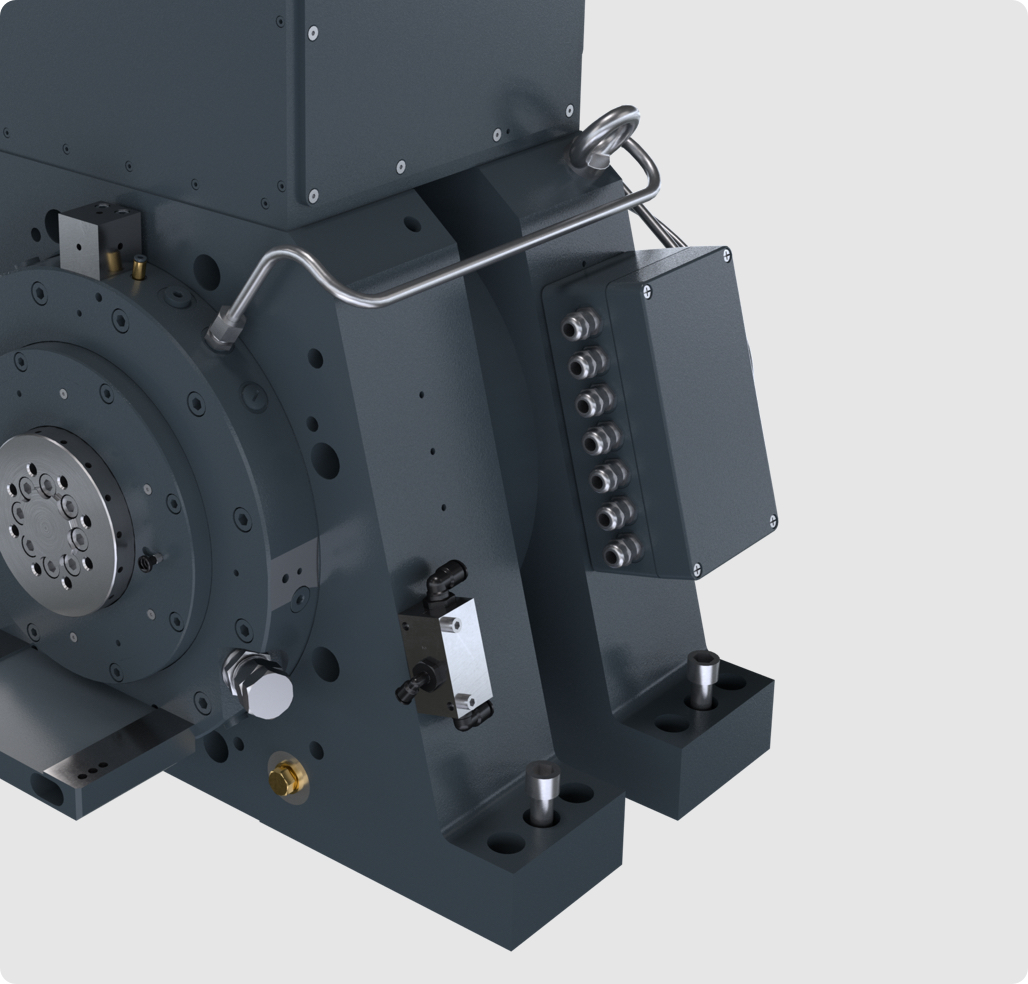
The key lay not only in the electromagnetic design, but also in the thermal concept. ATE and GTW jointly developed a dedicated cooling and bearing concept to ensure thermal stability, even under dynamic test cycles involving alternating continuous-load and overload phases.
ATE provided the motor’s electromagnetic design and detailed loss data, including copper losses, iron losses and speed-dependent additional losses across the operating range. These data formed the basis for the thermal assessment of the complete system.
The rotor structure was specifically designed to withstand the centrifugal forces occurring at 30,000 rpm, with the aim of ensuring mechanical integrity and low vibration across the entire speed range.
The RigBe 30k-4 covers two clearly defined operating ranges: 400 kW and 500 Nm in continuous operation (S1), and 500 kW and 625 Nm in periodic overload operation (S6).
This distinction is not merely theoretical; it reflects real test cycles, ranging from steady-state efficiency-map measurements to the simulation of highly dynamic driving profiles.
Developed jointly by ATE and GTW, the test-bench motor has been in operation since 2019. The RigBe 30k-4 has established itself as a platform for high-performance, highly dynamic test-bench systems.
Originally designed for speeds of 25,000 rpm, the platform has been continuously developed. Today, the RigBe 30k-4 enables speeds of up to 30,000 rpm.
With 400 kW of continuous power (S1) and 500 kW in periodic overload operation (S6), the motor meets the varying requirements of modern test cycles – from steady-state motor mapping to the simulation of highly dynamic driving profiles.
What this project demonstrates about test bench drives
Keeping pace with the increasing demands of modern electric drives requires more than simply increasing the speed of existing motors. Power density, inertia and thermal performance must be considered as an integrated system.
Anyone requiring a test bench motor that not only delivers power but also reproduces load scenarios precisely needs a development partner capable of engineering all three aspects together.